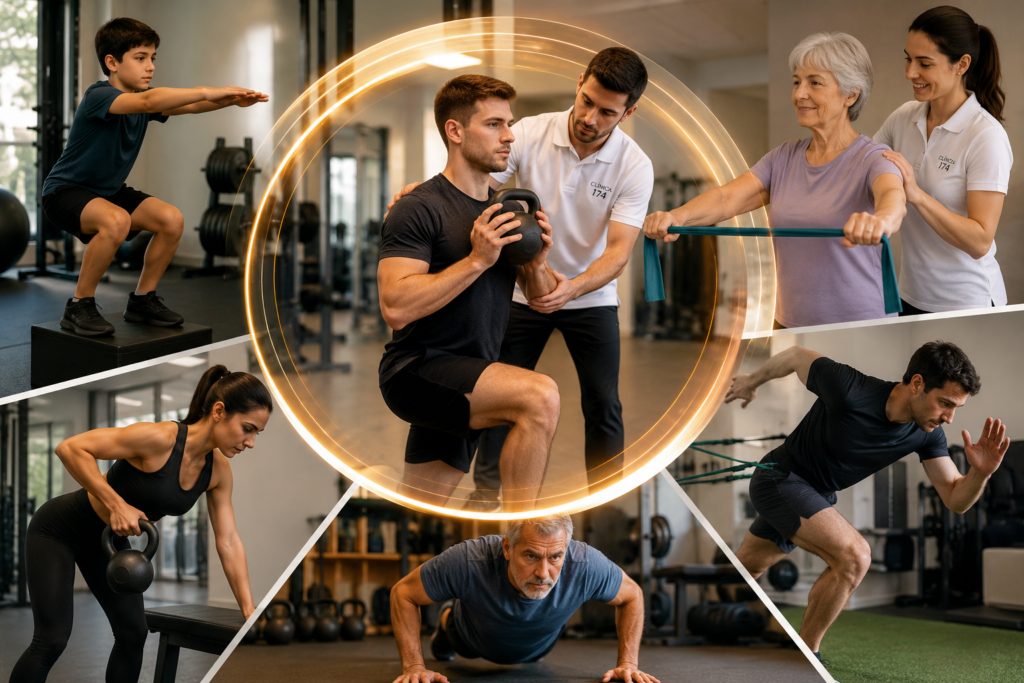
When we talk about functional training, many people immediately think of sports, intense workouts, or sessions intended only for those who are already in good physical shape. But training goes far beyond that. At Clínica 174 , we view functional training as a tool for building strength and improving our body’s ability to respond to what we ask of it—whether in daily life, during recovery, or while playing sports. Strength is necessary for getting up from a chair, climbing stairs, carrying grocery bags, running, jumping, playing, working, participating in sports, or maintaining our independence as we age.
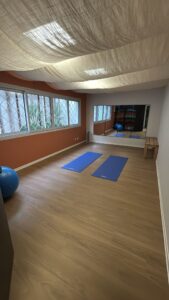
At our clinic in Palma de Mallorca, we have a fully equipped training room where we conduct functional training sessions led directly by physical therapists. The physical therapist designs, directs, and adapts each training session based on the individual’s age, physical condition, medical history, and goals. That’s why we work with such a wide range of clients: children and teenagers, adults who want to start building strength, people recovering from an injury or surgery, athletes undergoing rehabilitation, and older adults who want to maintain or regain their strength and independence.
Functional Training: Strength as the Foundation of Movement
Strength training means teaching the body to generate and control movement against resistance. That resistance can be our own body weight, a resistance band, a dumbbell, a barbell, a machine, or other training equipment. Although we may work on mobility, balance, coordination, stability, or endurance during a session, strength training plays a fundamental role in our workouts. There is no one-size-fits-all load: for a beginner, a particular exercise may provide sufficient stimulation, while for someone who has been exercising for years, it may be too easy.
That’s why it’s important to tailor both the exercise and the load—as well as how you progress— to each individual. The goal isn’t to do increasingly difficult exercises either. Often, the simplest movements are the ones that allow us to work out most effectively. The key is to choose carefully what to train, what load to use, and how to progress. That’s where it becomes especially important for the training program to be designed and led by a professional.
Training led by a physical therapist
At Clínica 174, the physical therapist does more than just supervise while the patient works out. The physical therapist designs and leads the session, selects the exercises, teaches proper form, determines the intensity, makes the necessary adjustments, and establishes a progression plan based on each person’s response and goals. This allows us to combine physical therapy expertise with exercise and strength training—an approach that is especially useful when there is a history of injuries, surgeries, discomfort, or limited range of motion.
It also makes a lot of sense when we simply want to start working out and don’t know how to go about it. Many people come in for a consultation saying they want to build strength or start going to the gym, but they don’t know what exercises to do, what weights to use, or how to tell if they’re making progress. In these cases, training can also become a learning process: the person learns how to perform strength exercises, master proper form, become familiar with different weights, and understand how to progress.
Strength in Children and Adolescents
Strength training can also be part of exercise during childhood and adolescence, provided it is properly adapted to the age and developmental stage of each child or adolescent. During these stages, we aim to build a strong physical foundation by combining strength, coordination, balance, agility, and body control. The goal is not to replicate adult training, but rather to teach movements, design appropriate exercises, and help them progress in an appropriate manner.
For children and adolescents who play sports, training can also serve as a complement to their regular activities, helping them develop the physical skills they will later need when running, jumping, accelerating, braking, or changing direction. Furthermore, learning from a young age to engage in exercise and strength training helps them acquire knowledge and habits that can stay with them for many years.
Adults: Learn How to Do Strength Training, Even If You've Never Done It Before
“I know I should start working out, but I don’t know where to begin.” It’s a phrase we hear all the time. Many people want to take care of themselves and start working out, but walking into a gym with no experience can raise a lot of questions: What exercises should I do? How many reps? What weight should I use? How do I know if I’m doing it correctly? When should I increase the weight?
You don’t need to know how to train to get started. In fact, we can start in order to learn how to do it. In one-on-one sessions, we start at each person’s actual level, teach the exercises, work on proper form, and gradually introduce and increase the intensity. The goal is for the person to gain strength, but also to understand what they’re doing and build confidence. For some, these sessions will become their regular workout routine; others will come for a while to learn and then continue on their own at a gym.
Regaining strength after an injury or surgery
After an injury or surgery, there comes a point when simply reducing pain or regaining mobility is no longer enough. You need to regain strength and the ability to tolerate loads. A joint may be able to move properly again, but that doesn’t necessarily mean it’s ready to withstand the demands of daily life or sports. That’s why strength training often plays a very important role in many rehabilitation programs.
As we move forward, we can introduce exercises with progressively greater loads and work on the strength, stability, and control needed to resume the activities the person wants to do again. The ultimate goal is not just for an area to stop hurting, but for it to once again be able to tolerate load, generate force, and respond to the real demands of daily life. And when we’re talking about an athlete, those demands can be even greater.
Strength and Rehabilitation: Preparing Athletes to Return to Their Sport
Being able to walk again without pain isn't the same as being ready to run again. And being able to run doesn't necessarily mean you're ready to compete. Sports require strength, but they also require the ability to apply that strength in different situations: accelerating, braking, jumping, landing, changing direction, striking, pushing, pulling, or repeating movements many times.
That’s why, during an athlete’s rehabilitation, we gradually progress from more basic strength exercises to tasks that are increasingly related to the actual demands of their sport. The training will depend on the injury, the stage of recovery, the athlete’s previous fitness level, and, of course, the sport they play. Someone who wants to start running again has different needs than someone who plays soccer, padel, cycles, or does strength training. The goal is for the body to not only be recovered but also prepared to once again withstand the demands of the sport.
Older Adults: Strength Training to Maintain Independence
As the years go by, maintaining strength becomes especially important. Not because we need to lift heavy weights, but because we need to continue performing the small tasks that allow us to be independent: getting up from a chair, walking, climbing stairs, carrying a bag, maintaining our balance, or getting up from the floor. All of these actions require strength.
That is why, for older adults, one of our main goals may be to maintain or regain the strength needed to function safely and independently in daily life. Exercises and resistance levels are tailored to each individual and progress according to their abilities. We can also work on balance, mobility, coordination, and endurance as needed. Age does not determine whether we can do strength training; it determines how we should adapt that training.
Individual sessions and partner training
Most of our functional training sessions are one-on-one. This allows the physical therapist to devote the entire session to a single person, observe how that person responds to each exercise, and tailor the exercises, loads, and progressions to their needs. We also offer the option of training in pairs or as a duo.
For some people, starting out with their partner, a brother or sister, another family member, or a friend is more motivating and enjoyable. Working out together doesn't necessarily mean doing exactly the same thing. Even though it's a shared session, we can adapt the exercises and intensity to each person's level and goals.
What is a functional training session like?
We don’t have a standard session that’s the same for everyone. Before deciding which exercises to do, we take into account the person’s starting point, background, current abilities, and—most importantly—their goals. From there, the physical therapist designs the session. Strength training usually makes up a significant part of the workout and can be combined, depending on the individual case, with exercises for mobility, balance, coordination, stability, or endurance.
We can also include movements related to activities of daily living, specific exercises for recovery, or tasks tailored to the needs of a particular sport. And, above all, we aim to make progress. If our body is always subjected to exactly the same stimulus, there will come a point when it will have little reason to continue adapting. That’s why, as we improve, we can adjust the weights, repetitions, range of motion, speed, or difficulty of the exercises.
A gym inside a physical therapy clinic
Having a training room within Clínica 174 allows us to integrate exercise and strength training into our approach to physical therapy and movement. In some cases, a patient comes to us because of an injury or following surgery. They begin by regaining mobility, then gradually increase the intensity, regain strength, and eventually perform exercises that are increasingly similar to their daily activities or their sport.
In other cases, people come in specifically to work out—not because they have an injury, but because they want to build strength, learn how to exercise, and do so with personalized guidance from a physical therapist. While their starting points may differ, the facility and the approach remain the same: using exercise in a personalized way to improve each person’s abilities.
Strength is for everyone, but training can't be the same for everyone
A child, a 25-year-old athlete, someone who has never worked out, and a 75-year-old can all benefit from strength training. But obviously, they don’t need the same training. That’s why, for us, tailoring the program to each individual is a fundamental part of the process.
For a child, training can mean building strength and coordination. For an adult, it can mean learning to use weights for the first time. For someone who has undergone surgery, it can mean regaining lost strength. For an athlete, it can mean regaining the ability to meet the demands of their sport. And for an older adult, it can mean maintaining the ability to get up, walk, and remain independent . Strength is a factor in all of these situations. What changes is how we train it.
Functional and Strength Training at Clínica 174
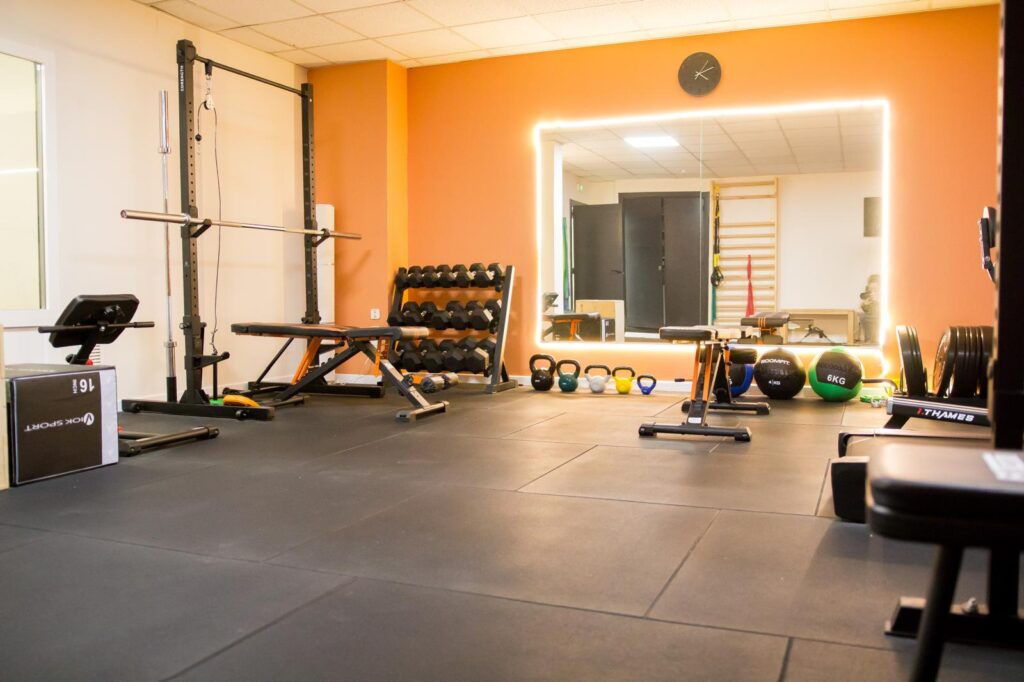
At Clínica 174, we offer functional training and strength training sessions in our fully equipped gym in Palma de Mallorca. Each session is led by a physical therapist, who is responsible for designing, leading, and tailoring the workout to the individual in front of them.
You can come to learn strength training, improve your physical fitness, enhance your performance in your sport, continue rehabilitation, regain abilities after surgery, or simply feel stronger and more capable in your daily life. Sessions can be conducted one-on-one or in pairs, depending on each person’s needs and preferences.
It doesn't matter if you've never done strength training or if you've been playing sports for years. Your starting point will be different, and so will your goal. Because it's not about adapting your body to a predetermined workout. It's about adapting the workout to you, to help you get stronger, move better, and do what you want to do with greater confidence.