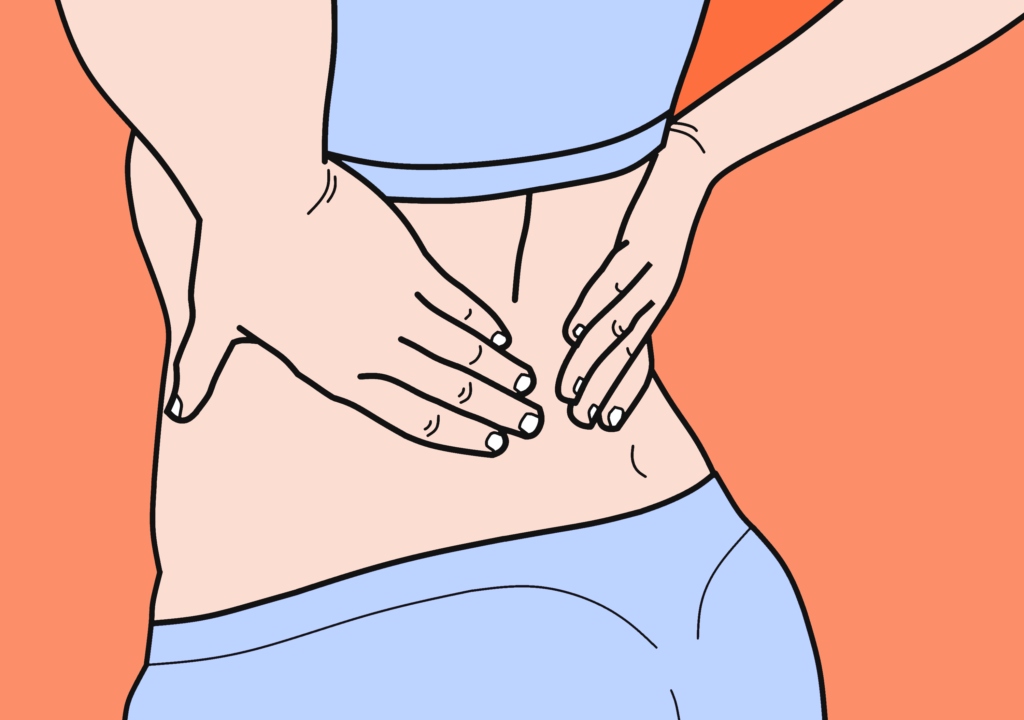
Many people experience lower back pain when getting out of bed. That feeling of stiffness, a “stiff” back, or discomfort during the first few steps of the day is one of the most common reasons people seek physical therapy. In most cases, lower back pain in the morning does not necessarily mean there is a serious injury. However, it can indicate that the lower back is more sensitive or overloaded. Although maintaining certain postures for long periods can play a role, back pain isn’t caused solely by “poor posture.” We now know that other factors are also important, such as lack of mobility, stress, fatigue, or even loss of muscle strength. When the back and abdominal muscles aren’t strong enough to support the demands of daily life, certain structures can become more sensitive and cause pain.
What structures can cause lower back pain?
The lower back is made up of various structures that work together to enable movement and provide stability to the body: muscles, joints, intervertebral discs, ligaments, and nerves. When we spend many hours without moving (sleeping or sitting), some of these structures may temporarily become stiffer or more sensitive. In addition, if there is muscle weakness or low tolerance for physical exertion, the body may have more difficulty adapting to certain loads or movements.
Why is the pain usually worse when you wake up?
At night, we spend several hours virtually motionless. Although rest is essential for recovery, that lack of movement can cause stiffness in the lower back. That’s why many people experience morning lower back pain, stiffness in the lower back, difficulty straightening up, and discomfort when getting out of bed. Something similar happens after spending a long time sitting on the couch, working, or reading. The problem isn’t always the posture itself, but rather staying still for too long.
How can physical therapy help?
Physical therapy aims to reduce pain, improve mobility, and help the body regain its ability to move and bear weight. Depending on the individual case, treatment may include:
– Manual therapy and mobilization techniques
– Mobility Project
– Muscle-strengthening exercises
– Movement retraining
– Therapeutic exercise and therapeutic Pilates
Muscle strengthening is especially important in cases of recurrent lower back pain, as it helps improve the body's stability and ability to cope with daily activities.
Why is it important to treat lower back pain?
Many people get used to living with lower back discomfort, thinking it’s “normal.” However, lower back pain can affect sleep, work, sports, and even simple activities like walking, bending over, or getting up from a chair. Relieving pain doesn’t just mean feeling better physically. It also helps you regain confidence in your movements, resume daily activities with greater comfort, and improve your quality of life.
Our Clinical Approach
At our clinic, we conduct an individualized assessment starting with the very first session to understand the root cause of the problem and the needs of each patient. Based on that assessment, we design a personalized treatment plan that combines physical therapy, therapeutic exercise, and Pilates, tailored to each person’s goals and pace. Every case of lower back pain is different. That’s why a personalized treatment plan is often the best way to achieve lasting results and prevent relapses.